


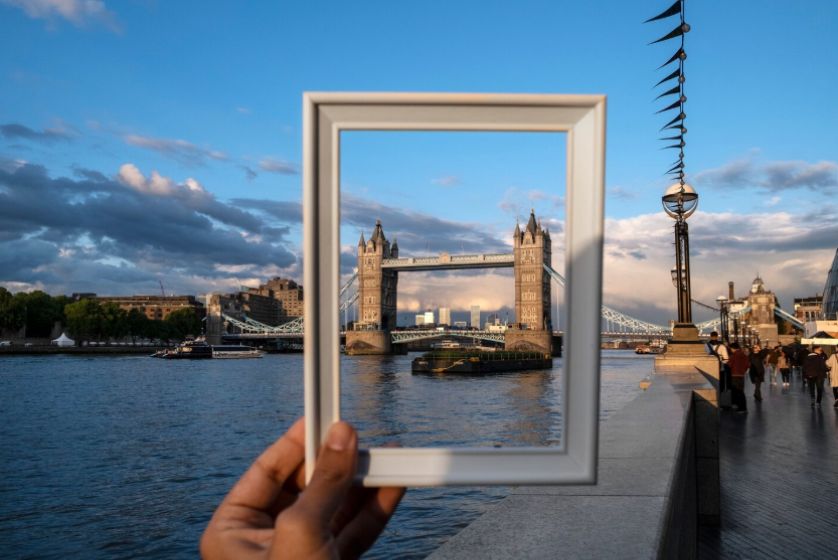





London imposes a sensory overload that often traps visitors in the West End. According to Transport for London (TfL)’s Q4 2024/25 performance report, the London Underground recorded 1,216 million journeys for the year (averaging 3.33 million daily), up 3% year-on-year, creating intense crowding during rush hour peaks on key lines. To explore London like a local, you need to bypass the standard London travel guide suggestions and navigate the logistical realities of a sprawling, aggressive metropolis.
Table of Content
- The Reality of London Tourism
- Why do most things to do in London miss the mark?
- Finding local places in London beyond the West End
- How to explore London like a local without the crowds?
- The reality of London food spots and London street markets
- Essential London travel tips for the modern commuter
- Planning your London travel itinerary
- Navigating cultural attractions in London
- FAQs
- Streamlining your London travel guide
The Reality of London Tourism
London is not a theme park, though the density suggests otherwise. The capital welcomed 20.95 million international visitors in 2024, a 29.8% increase from 2022, yet nearly all of them funnel into the same central boroughs (RoadGenius). It is a collection of villages stitched together by a Victorian rail network that frequently fails. Visitors who stick to the “Big Ben to Buckingham Palace” circuit see the architecture, but they miss the pulse of the city entirely.
Most itineraries fail because they underestimate the sheer scale of the sprawl. You cannot “do” East London and West London in the same afternoon without spending three hours in transit.
The consequence of this mismanagement is exhaustion. You spend hundreds of pounds on peak-time travel cards only to see the back of a stranger’s head on the Central Line. A successful trip requires surgical precision in planning, not just a list of landmarks.
Why do most things to do in London miss the mark?
Standard top-ten lists funnel millions into the same three square miles, creating queues that consume half your day. Real Londoners avoid Leicester Square at all costs. Generic guides treat London as a single entity, not a series of disconnected boroughs, charging you a premium for a diluted experience. You eat at chains because you are too tired to find independent spots.
Most suggested things to do in London prioritize proximity over quality. They send you to a mediocre Piccadilly pub simply because it is near a theater. A fifteen-minute bus ride lands you in a historic tavern with better ale. To understand this city, accept that the best experiences require travel time.
Finding local places in London beyond the West End
Staying central means paying a “tourist tax” on everything from coffee to cab fares. Venturing out reveals local places in London where the architecture is stunning, but the pace is humane. Hampstead Heath, for instance, offers skyline views rivaling the Shard without the security check or ticket price. You can swim in ancient ponds and end up in a 17th-century pub.
The best neighborhoods in London are often unheard of—like Stoke Newington or Peckham. These areas function as self-contained ecosystems independent of the Westminster crush. Whether it’s Turkish grocers on Church Street or Peckham’s railway arch breweries, these aren’t just photo ops; they are where the city actually lives.
How to explore London like a local without the crowds?
To truly understand this city, seek out hidden gems in London that reject the commercial center. Non-touristy things to do in London include the Barbican’s brutalist concrete jungle or walking the Regent’s Canal from Angel to Victoria Park. This route connects the manicured wealth of Islington to the creative chaos of Hackney, offering a perspective that bus tours miss entirely.
Seeking London off the beaten path requires taking the Overground instead of the Tube. The orange line circles the creative hubs the underground ignores. It is cooler, cleaner, and offers actual views of the skyline rather than dark tunnels.
The reality of London food spots and London street markets
Skip Borough Market on a Saturday; it is a gridlock of cameras and overpriced cheese. Real London street markets like Broadway or Maltby Street offer superior produce without the brawl. Broadway Market is where East London converges for artisanal bread and Vietnamese coffee. It is crowded, but local.
London food spots here rely on repeat business, forcing a quality standard that central tourist traps ignore. The dining scene has shifted East and South. For authentic London experiences, head to Brixton Village or Tooting Market. These covered markets host independent kitchens serving Caribbean curry and Japanese okonomiyaki. Low rent fuels experimentation, not generic fish and chips.
Essential London travel tips for the modern commuter
Navigating the transport network is the primary challenge. One of the most critical London travel tips is to avoid the tube between 7:30 AM and 9:30 AM. It is not just busy; it is physically uncomfortable. You will be pushed, shoved, and overheated. If you must travel at this time, use the bus or the Thames Clipper. The river bus is the most civilized way to commute, offering seats, coffee, and a view, even if it costs slightly more.
Furthermore, using London City Cab Services can often be cheaper than three individual tube fares if you are traveling in a group, yet most guides ignore this math. The black cab knowledge is legendary, but for airport transfers or cross-borough trips with luggage, pre-booked private rides remove the stress of navigating stairs and escalators.
Another vital tip regarding tips for visiting London: Do not stand on the left side of the escalator. Ever. It is a social violation that marks you instantly as a tourist. Londoners value efficiency above all else in transit. If you are not walking, you stand on the right.
Planning your London travel itinerary
A robust London travel itinerary acknowledges that travel time is dead time. Group activities by neighborhood, stay in South Kensington for the V&A rather than losing an hour crossing to the Tower of London. The best time to visit London is late spring or early autumn, avoiding the humid stagnation of deep tube lines like the Central in August, where temperatures often exceed legal limits for livestock. As we look at a London travel guide 2026, the focus shifts to sustainable, slower travel via walking routes like the “Thames Path.” You see more and arrive cooler than taking the train. For the Best Places to Visit in London, target late openings on Fridays to avoid crowds. Late-night navigation often requires Affordable Rides in London once the limited Night Tube coverage ends.
Navigating cultural attractions in London
Cultural attractions in London are vast, but many are free. The Tate Modern and the British Museum require no entry fee, yet visitors queue for hours to pay for attraction rides like the London Dungeon. It is a misuse of resources.
London walking tours can provide context, but self-guided exploration through the City of London’s quiet weekend streets often reveals more history than a megaphone-led group. The City (the financial mile) is virtually deserted on weekends. You can walk amongst Roman ruins and skyscrapers without fighting crowds. A proper London sightseeing guide should tell you where to look, not just where to stand. Look up at the entablatures on Fleet Street; look down at the rivets on Tower Bridge. The history is in the infrastructure.
For those interested in the macabre or the specific, niche museums like the Sir John Soane’s Museum or the Dennis Severs’ House provide a visceral connection to the past that the massive institutions cannot replicate. They are intimate, fragile, and require silence. This is where you feel the ghosts of the city.
FAQs
Is the London Pass worth it for a 3-day trip?
It depends entirely on your pace. If you plan to hit 3-4 major paid attractions daily, it saves money. For a relaxed, local-style trip, it is a waste of capital.
How do I pay for transport in London?
Do not buy a paper ticket. Use a contactless bank card or mobile pay directly on the yellow readers. It is capped daily, ensuring the best rate.
Is East London safe for tourists?
Yes, areas like Shoreditch and Hackney are vibrant hubs of nightlife and culture. Like any major city, standard situational awareness is required, but it is not dangerous.
What is the congestion charge?
It is a daily fee for driving in central London. If you hire a car or use a standard ride-share, this cost is passed to you. Professional services handle this transparency better.
Do I need cash in London?
Rarely. London is predominantly a cashless society. Many coffee shops and bars in things to do in London lists do not accept physical money at all.
Streamlining your London travel guide
Navigating the geography of the capital is a burden that ruins even the best itineraries. While the goal is to see the city, the reality is that the logistics usually win. RideNoww acts as the essential bridge to ensure that your transit across the boroughs is accessible and streamlined. We simplify the complexity of London travel tips and transport so you can focus on the experience rather than the map. If you are ready to elevate your trip and leave the tube map behind, the solution is right here. Book Your Ride.